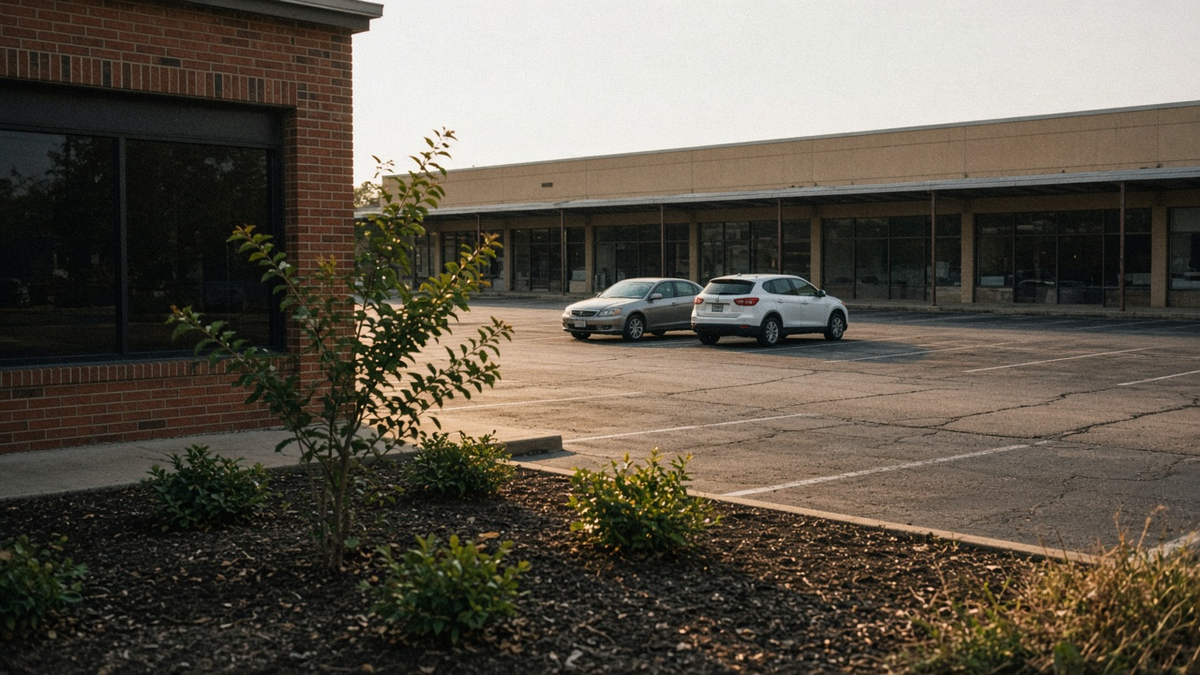
Choosing retail space in Jersey Village? We compare an inline strip suite with a freestanding pad site: cost, visibility, timing, control, and who each one fits.
If you run a shop, a restaurant, or a service business and you are looking for retail space in Jersey Village, the choice usually narrows to two kinds of space. One is an inline suite in a strip center, a unit that shares walls with its neighbors under one long roof. The other is a freestanding pad site, a building on its own parcel, often out near the road in front of a larger center.
Both can work. Both can hurt you if they do not fit how your business actually makes money. Here is our honest read on the trade-offs. This article covers commercial retail space only.
What you are really choosing between
An inline suite is space you lease inside a building the landlord already owns and runs. The roof, the parking lot, and the big sign out front are shared, and so are the costs of keeping them up.
A pad site is a separate parcel with room for one building. Sometimes the building is already there and you lease it. Sometimes it is dirt, and the deal is a ground lease, a build to suit where the owner builds it for you, or a purchase.
Cost: the sticker price is not the whole story
People often assume the inline suite is the cheap option and the pad is the expensive one. That is often true for total dollars, but the structure matters as much as the rent.
- Inline. You typically pay base rent plus your share of operating costs, often called common area maintenance, along with your share of taxes and insurance. Those shared costs can move from year to year, so ask for the history and ask how increases are capped, if at all.
- Pad. Rent or ground rent may look higher, and you may carry more of the building costs directly. On a ground lease or new build, you may also be paying for design, site work, and construction before you open.
We will not quote rent ranges here, because they shift with the specific center, the condition of the space, and the term. Get real numbers from real proposals and compare them on a total occupancy cost basis, not base rent alone.
Visibility, signage, and access
This is where pad sites earn their reputation. A freestanding building near the road usually gets its own facade on more than one side, a better shot at its own monument sign, and easier in and out for customers.
An inline suite usually gets a storefront sign and, if you negotiate for it, a panel on the center's shared sign. An end cap suite can split the difference with extra glass and a side wall. Keep in mind that sign rules come from the city and from the landlord's own sign criteria, and you need both to say yes.
The hard thing to say: a pad site does not fix a weak concept, and an inline suite in a well-run center with strong neighbors can outdraw a lonely pad that customers have to work to reach.
Drive-thru and site layout
If you need a drive-thru, a pad site is often the only realistic answer. A stacking lane and a pickup window need room and traffic flow that most strip centers were not designed for. Even on a pad, the layout has to work with parking, drainage, fire access, and any recorded restrictions on the center, so get an engineer to test fit it before you commit.
Build out, timing, and permits
An inline suite, especially second generation space that already has plumbing, a ceiling, and a storefront, can often be ready faster. You still need permits and inspections for your build out.
A pad site, especially raw land, adds steps: site plan review, utility connections, drainage, and sometimes platting. Jersey Village has dealt with flooding, so check the flood maps and the city's floodplain rules early. We walked through how that review works in our piece on Jersey Village floodplain permits, and the same questions apply to a retail pad.
Control, flexibility, and commitment
In an inline suite, the landlord controls a lot: the lot, the hours of shared services, the look of the storefront, and often what your neighbors can sell. An exclusive use clause, if you can get one, may keep a direct competitor out of the center, but you live by the landlord's rules.
A pad gives you more control over the building, the layout, and the customer experience. It also asks for a bigger and usually longer commitment. Ground leases and build to suit deals tend to run longer, and walking away early can be expensive. That is a real risk for an unproven concept.
Who each option tends to fit
An inline suite often fits:
- A first or second location that wants a lower upfront cost and a shorter commitment
- Service businesses where customers come on purpose, such as salons, studios, and clinics
A pad site often fits:
- Concepts that need a drive-thru or a dedicated pickup lane
- Established operators with a proven unit and the capital for site work
- Businesses that live on visibility from passing traffic
Questions to ask before you sign
- What is my total occupancy cost, not just base rent, and how have shared costs changed in the past?
- Is the property in or near a mapped floodplain, and has the site or building taken on water?
- What do the city sign rules and the landlord's sign criteria allow for this space?
- Are there recorded restrictions on the center that limit my use, hours, or layout?
- Does the space, its entrance, and its parking meet current accessibility rules, and who pays if it does not?
- On a pad, who handles site work, utilities, and drainage, and what happens if approvals take longer than planned?
Where we land
There is no universal winner. If you are early, cost sensitive, or still testing a concept, we usually lean toward a good inline suite in a well-kept center. If drive-thru traffic or road visibility is the engine of your business and you have the capital and the patience for site work, a pad can be worth the extra commitment. If you want a broader checklist for retail space in this part of northwest Houston, our Cypress retail space guide covers the basics that apply here too.
This article is general information, not legal advice. Lease terms, sign rules, floodplain maps, and permit procedures change and vary by property, so confirm current requirements with the City of Jersey Village, your engineer or architect, and a qualified Texas real estate attorney.
If you are weighing an inline suite against a pad site in Jersey Village and want a second set of eyes on the numbers, reach out to our team. We will tell you what we would do in your shoes.