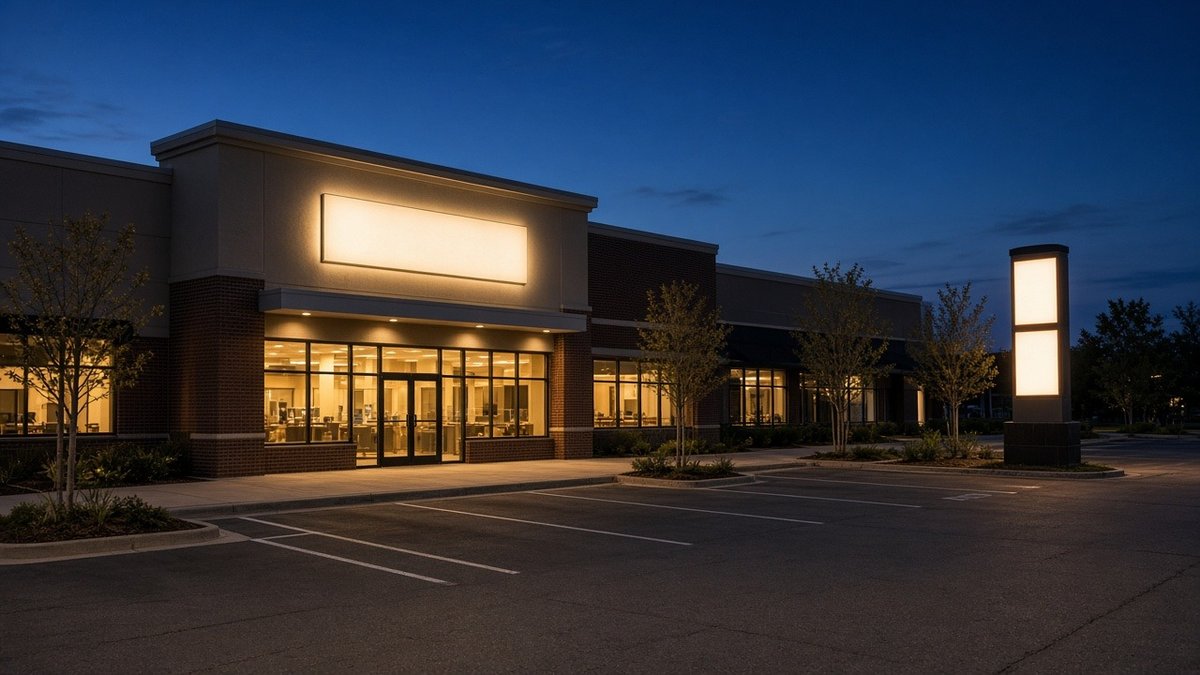
Leasing or buying retail space in Spring? Your sign may fall under Harris County, the City of Houston, or private center rules, depending on the address and your lease.
A retail tenant usually thinks about the sign last. The lease is signed, the buildout is moving, and then someone asks who approves the storefront sign and the panel on the center's pylon. In Spring, TX the honest answer is that it depends on the address. Spring is largely unincorporated Harris County, so there is often no single city sign office to call. We raise that question early on every retail search or sale we handle in north Houston.
Start with the jurisdiction, not the sign
A Spring mailing address does not tell you who regulates the site. Most of the area sits outside any city, but some parcels may fall inside the City of Houston, and some unincorporated land sits in Houston's extraterritorial jurisdiction, called the ETJ. Before you price a sign package, find out which applies to the exact parcel:
- Inside a city's limits: The city's sign rules and permit office apply.
- Unincorporated Harris County: The county's engineering department runs a sign permit program.
- Houston's ETJ: The land is still unincorporated, so ask both the county and the city who handles signs.
What Harris County says about on premise signs
The Harris County Engineering Department states that permits are required before on premise signs go up in the unincorporated area, including scenic, toll road, and ETJ locations. Its page names lease space buildout and change of occupancy as examples. The county sorts signs by the road they face, from toll road and scenic frontage to major thoroughfares and freeways, so the road your center fronts matters.
Applications go through the county's E-Permits portal and include a site plan showing all proposed and existing signs, sign details with dimensions, and a survey for new ground signs. Larger signs can call for engineered plans. The county also asks applicants to verify that the business has an occupancy permit for the space, if one applies. Once a construction permit is issued, the county expects the work to be finished within 180 days, and a final inspection follows. The county also prohibits off premise signs.
What changes inside the City of Houston
If the site is within Houston, the Houston Permitting Center's Sign Administration office handles advertising signs. Its page says the height, size, and lighting of a sign depend on the category of the street it faces, and scenic and historic districts add their own layers. Permits are generally issued to licensed sign contractors, applications are online, and new ground signs need a survey. Electrical signs need an electrical shop inspection before installation and a final electrical inspection once energized.
Houston's page also mentions the ETJ, while the county's page treats ETJ signs as part of its program. We read that as a reason to ask, not guess. A short call to the county's sign permitting group and the city's Sign Administration office settles it for your address.
Where TxDOT fits
TxDOT regulates off premise outdoor advertising along many highways, and its license and permit process is aimed at billboard operators, not tenants with a storefront sign. It still matters in one way: if a landlord or third party floats a freeway facing sign that advertises something not sold on site, the rules look very different from an ordinary tenant sign.
The private layer: center criteria and deed restrictions
A government permit is only one gate. Most shopping centers have written sign criteria, often attached to the lease, covering letter style, color, illumination, panel sizes, and who may use pylon or monument space. The landlord usually approves sign drawings before a contractor applies for a permit, so skipping that step can leave a tenant with a permit and a sign that still comes down.
Recorded deed restrictions and property owner association rules can add limits on top of that. Houston has no zoning ordinance, and the city's planning materials describe deed restrictions as the main tool that limits land use, with some areas covered and some not. The City Attorney enforces only certain categories of restrictions, and the city's own materials note that other private restrictions can still be enforced by property owners or associations. For a Spring site, we ask for the recorded restrictions and any association contacts during due diligence, and we do not treat a permit as proof that private rules are met.
Protecting the opening date in the lease
Sign timing catches tenants because it often runs behind the buildout. Landlord approval, permit review, fabrication, and inspections each take their own time, and the county's occupancy question ties the sign to the space itself. We try to build protection into the deal:
- Sign rights in writing: Confirm which storefront, pylon, or monument positions the tenant gets, and attach the center's sign criteria as an exhibit.
- Approval deadlines: Ask for a set window for the landlord to approve sign drawings, with a deemed approval or rent relief if it runs long.
- Permit contingency: Tie the opening date or rent start to sign permit timing where the business depends on visibility.
- Interim signage: Ask what temporary signage is allowed, and check with the authority for your address first.
Our tenant representation team raises these points in the letter of intent, before a lease draft locks in the landlord's form. Owners benefit too. Clear written sign criteria, a known permitting authority, and clean records help a center lease up with fewer surprises, which is a large part of our landlord representation work. Because occupancy and signs often move together, our Tomball certificate of occupancy guide shows how that review works in one nearby city.
Rules and procedures change, so confirm current requirements with the right authority for your address before you order a sign or set an opening date. If you are leasing or buying retail space in Spring, talk with our team and we will help you sort out who regulates the site and what the lease should say.